Showing posts with label torture. Show all posts
Showing posts with label torture. Show all posts
Wednesday, July 11, 2012
Away from the sun - a documentary on Palestinian Prisoners in Israeli jails
A documentary on Palestinian Prisoners and the torture they suffer in Israeli jails.
Created by the Palestinian Ministry of Detainees and released Detainees, Department of International Relations.


Tuesday, April 17, 2012
Call for international action: Show your support on Palestinian Prisoners day
12 April 2012 | International Solidarity Movement
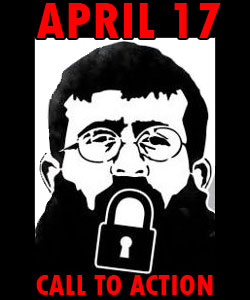 This
week International Solidarity Movement is calling for international
solidarity in the run up to Palestinian Prisoners Day on the 17th
April. The Palestinian prisoners struggle needs immediate international
attention as Israel’s treatment of prisoners under a military judicial
system starkly violates international law and fundamental human rights.
According to Addammer there are currently 4,637 Palestinian political
prisoners are kept in Israeli military jails and detention centers,
including 320 administrative detainees.
This
week International Solidarity Movement is calling for international
solidarity in the run up to Palestinian Prisoners Day on the 17th
April. The Palestinian prisoners struggle needs immediate international
attention as Israel’s treatment of prisoners under a military judicial
system starkly violates international law and fundamental human rights.
According to Addammer there are currently 4,637 Palestinian political
prisoners are kept in Israeli military jails and detention centers,
including 320 administrative detainees.
Some of the primary objectives of the prisoners struggle are:
“All people and governments of conscience in the world have an immediate responsibility to put pressure on Israel forcing them to respect International law and human rights!” says Faris Sabbah, from Addammer, the Prisoners support and Human Rights Association.
TAKE ACTION
You can:
What ever action you choose to take – please submit photos from your action to ISM at palreports@gmail.com.
You can get inspired from similar ISM campaign carried out in accordance to “Open Shuhada Street Campaign.”
Please follow these guidelines:
Updated on April 17, 2012
This
week International Solidarity Movement is calling for international
solidarity in the run up to Palestinian Prisoners Day on the 17th
April. The Palestinian prisoners struggle needs immediate international
attention as Israel’s treatment of prisoners under a military judicial
system starkly violates international law and fundamental human rights.
According to Addammer there are currently 4,637 Palestinian political
prisoners are kept in Israeli military jails and detention centers,
including 320 administrative detainees.Some of the primary objectives of the prisoners struggle are:
- To stop the system known as administrative detention, which allows the imprisonment of individuals without charge or trail
- To halt the practice of solitary confinement.
- To stop the use of torture and ill treatment. Palestinians are exposed to systematic ill and degrading treatment from the moment of arrest – both physiological and physical terrors are used as means of breaking the prisoners and getting details and information.
- To stop the illegal transference of prisoners from the occupied territories into Israeli borders. Every time Israel brings a prisoner from the West bank jails inside their borders – they are in clear violation with the 4th Geneva Convention.
- To stop the use of military courts for civilians.
- To stop arrest and imprisonment of vulnerable groups such as children, elder and disabled.
“All people and governments of conscience in the world have an immediate responsibility to put pressure on Israel forcing them to respect International law and human rights!” says Faris Sabbah, from Addammer, the Prisoners support and Human Rights Association.
TAKE ACTION
You can:
- Organize a protest in front of the Israeli Embassy or consulate in our town
- Write letters to protest the violations of rights of Palestinian political prisoners and to call for an intervention to the International Committee of the Red Cross, UN Secretary General Ban Ki-moon and your governoment or parliamentarians.
- Write letters to Palestinian prisoners expressing your support. Read more about thise here:
What ever action you choose to take – please submit photos from your action to ISM at palreports@gmail.com.
You can get inspired from similar ISM campaign carried out in accordance to “Open Shuhada Street Campaign.”
Please follow these guidelines:
- In the subject line please write “ Campaign for international solidarity with Palestinian prisoners”
- Photos should not be a maximum of 1 MB
- A poster, sign, clothing or any other visual statement that expresses your solidarity with Palestinian prisoners should be visibel.
- Include a location of the photo (example: Hollywood sign, Hollywood, California) in the email
- Include the date when the photograph was taken in the email
- If the visual is written in a language other than English, please write the statement in the body of the email in order to be translated.
- Photos should be original and not edited or borrowed from another entity
- Photos must be submitted by April 19th.
Saturday, November 12, 2011
Free at Last: Profiles of Courage
Ufree
 |
On 18 October 2011, the first 477 of an eventual 1,027 Palestinian prisoners in Israeli jails were released in exchange for Gilad Shalit, an Israeli soldier captured five years previously. Of the Palestinians who have or will be freed, 280 were serving life sentences and 27 were women. Most had been deprived of family visits for years, and had suffered repeated torture, sentences to solitary confinement and refused access to education. The release came as more than 6,000 Palestinian prisoners staged a hunger strike to protest the harsh conditions. While the release is good news welcomed throughout the occupied territories, some families will still be separated. Of the first 477 prisoners released, 110 were returned to their homes in the West Bank and 203 were deported to Jordan, Turkey, Qatar and Syria, which agreed to take prisoners who Israel insisted, must not be allowed to return home. The rest (131) were freed in Gaza -- even if they were not originally from there. The agreement is the highest “price” Israel has ever paid for a single soldier. Israel places a high value on Israeli life and freedom, and assigns little worth to Palestinians. Thus, captures and exchanges are the only way to win their release. Approximately 5,300 Palestinian prisoners remain in Israeli jails, waiting to be freed. Here are the stories of just two of the released Palestinians: Ayman Kafishah; jailed since April 1997: On April 5, 1997, Ayman was arrested by Israeli security forces and immediately transported to Ha Shikmah Prison in Israel. According to testimony he later delivered to the UN Commission on Human Rights and publicized by B’tselem, an Israeli human rights agency, Ayman was then interrogated nonstop for 36 hours. Tactics used to coerce him to talk included:
Ayman was denied the right to consult with his lawyer for a full month, and was not allowed any family visits for the entire 14 years he was jailed. His daughter, Sarah, knew of her father only through photographs.  Although Ayman was freed in the prisoner exchange for Shalit, his forced separation from his wife and daughter continues. He was immediately exiled to the Gaza Strip, and his family was denied permission to travel there to see him from the West Bank. They have seen him only on TV, waving to the crowds in Gaza. “I was awakened (on Oct. 18, 2011) to the sound of my mother calling me,” recalls Sarah Kafishah. “I got up and rushed towards my mother, who was sitting in front of the TV. My mother knelt on the ground and thanked God.” Sarah and her mother said in a statement that they thank the Palestinian negotiators and the Egyptian mediators for making the exchange happen. They also called on the international community to put pressure on Israel to allow Ayman’s family to leave the West Bank to visit him in Gaza. A 14-year separation is long enough. Obada Saeed Bilal; jailed since April 2002: A native of Nablus in the West Bank, Obada is the son of Saeed Bilal. Obada was studying journalism at Najah University when he was seized, during the Israeli military campaign on the West Bank codenamed "Defensive Shield." He was charged with being a supporter military activities, It was just two weeks after his marriage to Nelly AlSafadi. Obada was sentenced to 11 years in jail and subjected to intensive torture, along with a number of stays in solitary confinement -- one time longer than six months. Says Obada: “I endured many rounds of continuous interrogation, during which the physical and psychological torture was so harsh my body became exhausted and I lost consciousness many times.”  Obada had always struggled with poor eyesight, but he went totally blind by the time he was released from prison. His family has paid a heavy price to the Israeli occupying force. Obada’s wife, Nelly and three brothers also served time in Israeli prisons. Nelly, who was released several months before Obada, was arrested at a roadblock while trying to enter Ramallah. Although Obada was later moved to the same prison in which she was being held, they were never allowed to be together. Although Obada was freed in the prisoner exchange for Shalit, he was immediately exiled to the Gaza Strip and his wife Nelly was denied permission to travel there to see him. Both families are urging the international community and all human rights groups to put pressure on Israel to strop its daily integration to Palestinians on check points and crossing borders and it must immediately allow those families access through crossing borders. |
Friday, November 4, 2011
Lopsided Prisoner Exchange
Wednesday October 26, 2011 19:18 by Doris Norrito - 1 of International Middle East Media Center Editorial Group
On Friday, October 21, in occupied Bil’in, six Palestinians were arrested; each day, more are added. The number detained and imprisoned fluctuates daily. The number of Palestinians jailed by Israel once topped 12,000 and currently stands at over 5,000.
Following six years in captivity, Gilad Shalit, was thin and pale, but nonetheless appeared in good health. Unlike the treatment Shalit received, Palestinians report different prison experiences.
Iyad Burnat was first arrested at the age of seventeen, during the first intifada. Twenty years have passed. Now, at 37, he is married and has four children. Today he is the head of the Bil’in Popular Committee and the Bil’in Friends of Freedom and Justice movement.
He recalls his first experience in prison. Soldiers, some dressed in civilian clothes, came to his house and grabbed him in the middle of the night, telling his father they only wanted to speak with him for five minutes. At the detention center, he was stripped of his clothes and left outside in the snow attached to a metal post with his hands cuffed above his head. He spent the next 20 days in solitary confinement in a small cell, hands fastened to the ceiling so he was forced to stand. At night, he was taken to a small cell crowded with 36 other prisoners. He remembers a hole in the roof where the cold winter rain and snow fell in. Every ten minutes soldiers banged on the door to keep prisoners awake. During the day, he was questioned, beaten, punched and kicked in attempts to persuade him to sign a confession of throwing stones at soldiers. They kept asking for the names of resistance members and, though he insisted he knew nothing about political affiliations, after 21 days of torture, he said he “cracked” and signed the paper. Two years later, he was released and served an additional year under house arrest.
The same week the prisoner exchange was taking place there were 47 separate Israeli invasions. Israeli militia forces abducted 12 Palestinians including two children. In addition, three Palestinian civilians, including a child, were abducted at checkpoints in the West Bank. And in Bil'in, Citizen Ashraf Abu Rahma was kidnapped while standing peacefully with his flag.” Common charges are for stone throwing (at tanks and soldiers in body shields), organizing demonstrations and for incitement. Many people are held without charges.
In 2005, villagers began non-violent demonstrations protesting the Wall and settlements built on their land. Kidnappings (aka arrests) and detentions of Bil’in residents began in earnest. Protesting, villagers say that the wall is not for security, but is for stealing their land to expand illegal Israeli settlements. Israeli military forces retaliate with violence, house raids and kidnappings.
Abed Khaled, Iyad’s second son, is ten. His childhood memories are those of armed Israeli soldiers who roam his village streets and raid his home at night, smashing things and keeping him and his brothers and sister from sleeping. The children live in constant fear of soldiers breaking in. Sleepless, the boy listens to the nightmare cries of his brothers and sister. Abed Khaled fears for his father’s safety when he is away from home and busy with Committee activities opposing occupation and confiscation of their farmland. Iyad says he seeks peace and a future of justice and freedom for his children.
The non-violent demonstrators persevere. And so do the arrests. Joined by internationals and Israeli sympathizers, increasingly more supporters risk being taken or forced to leave. Some people are detained for a short time; others remain in custody indefinitely, often without charge.
Shalit will return to his family, his home and community; his crime, that of being a soldier. Many returning Palestinian prisoners will not go home but, as part of the agreement, will be exiled to other countries or to Gaza where they have never lived and know no one. Their crimes vary, but underlying all is the “crime” of defending their homeland and resistance to colonial occupation.
The number detained and imprisoned [Palestinians] fluctuates as more are added daily. The number of Palestinians jailed by Israel once topped 12,000 and currently stands at over 5,000.While over a thousand Palestinian prisoners are exchanged for the return of one captured Israeli soldier, it is “business as usual” as Israeli forces captured more than a dozen Palestinians throughout the West Bank during that same week.
On Friday, October 21, in occupied Bil’in, six Palestinians were arrested; each day, more are added. The number detained and imprisoned fluctuates daily. The number of Palestinians jailed by Israel once topped 12,000 and currently stands at over 5,000.
Following six years in captivity, Gilad Shalit, was thin and pale, but nonetheless appeared in good health. Unlike the treatment Shalit received, Palestinians report different prison experiences.
Iyad Burnat was first arrested at the age of seventeen, during the first intifada. Twenty years have passed. Now, at 37, he is married and has four children. Today he is the head of the Bil’in Popular Committee and the Bil’in Friends of Freedom and Justice movement.
He recalls his first experience in prison. Soldiers, some dressed in civilian clothes, came to his house and grabbed him in the middle of the night, telling his father they only wanted to speak with him for five minutes. At the detention center, he was stripped of his clothes and left outside in the snow attached to a metal post with his hands cuffed above his head. He spent the next 20 days in solitary confinement in a small cell, hands fastened to the ceiling so he was forced to stand. At night, he was taken to a small cell crowded with 36 other prisoners. He remembers a hole in the roof where the cold winter rain and snow fell in. Every ten minutes soldiers banged on the door to keep prisoners awake. During the day, he was questioned, beaten, punched and kicked in attempts to persuade him to sign a confession of throwing stones at soldiers. They kept asking for the names of resistance members and, though he insisted he knew nothing about political affiliations, after 21 days of torture, he said he “cracked” and signed the paper. Two years later, he was released and served an additional year under house arrest.
The same week the prisoner exchange was taking place there were 47 separate Israeli invasions. Israeli militia forces abducted 12 Palestinians including two children. In addition, three Palestinian civilians, including a child, were abducted at checkpoints in the West Bank. And in Bil'in, Citizen Ashraf Abu Rahma was kidnapped while standing peacefully with his flag.” Common charges are for stone throwing (at tanks and soldiers in body shields), organizing demonstrations and for incitement. Many people are held without charges.
In 2005, villagers began non-violent demonstrations protesting the Wall and settlements built on their land. Kidnappings (aka arrests) and detentions of Bil’in residents began in earnest. Protesting, villagers say that the wall is not for security, but is for stealing their land to expand illegal Israeli settlements. Israeli military forces retaliate with violence, house raids and kidnappings.
Abed Khaled, Iyad’s second son, is ten. His childhood memories are those of armed Israeli soldiers who roam his village streets and raid his home at night, smashing things and keeping him and his brothers and sister from sleeping. The children live in constant fear of soldiers breaking in. Sleepless, the boy listens to the nightmare cries of his brothers and sister. Abed Khaled fears for his father’s safety when he is away from home and busy with Committee activities opposing occupation and confiscation of their farmland. Iyad says he seeks peace and a future of justice and freedom for his children.
The non-violent demonstrators persevere. And so do the arrests. Joined by internationals and Israeli sympathizers, increasingly more supporters risk being taken or forced to leave. Some people are detained for a short time; others remain in custody indefinitely, often without charge.
Shalit will return to his family, his home and community; his crime, that of being a soldier. Many returning Palestinian prisoners will not go home but, as part of the agreement, will be exiled to other countries or to Gaza where they have never lived and know no one. Their crimes vary, but underlying all is the “crime” of defending their homeland and resistance to colonial occupation.
Thursday, November 3, 2011
Freed Palestinian prisoner recounts torture and mistreatment in Israeli jails
Mukhlis Burghal, a Palestinian prisoner who was freed in exchange for Israeli soldier Gilad Shalit, recalls, "[The] torture keeps changing: beatings, isolation, tear gas, suspension of family visits." And after spending over 24 years in Israeli prisons, Burghal looks towards the future.

After more than two decades in Israeli prisons, Burghal is getting used to things like cellular technology. "I want to be with my family, stay in my city, get to know it and get to know the people once again," Burghal says. (Photo: German Krimer)
Mukhlis Burghal grins like a child each time his mobile rings. He has become addicted to cellular technology since he discovered it just ten days ago.
“I´m in love with it; I have it on me everywhere I go”, Burghal, 49, confesses with a boyish smile that clashes with his white hair. His face is kind; his manners remarkably relaxed for a man who spent over 24 years in Israeli prisons. He discusses both his time in jail and his new-found freedom under the shade of lemon and tangerine trees behind his family home in Lod, not far from Tel Aviv.
On October 18, Burghal was released along with 476 Palestinians in exchange for Gilad Shalit, the Israeli soldier who as captured by Hamas more than five years ago. Burghal seems neither sad nor angry. He is far too interested in “absorbing,” as he puts it, everything: the new unfamiliar objects, like cell phones; the old things he has forgotten; and the memories that helped him survive beatings and mistreatment--people and places that are becoming alive once again.
“This is like being born again. It´s what I feel; I´m being reborn”, he says, as he glances at his five-year-old niece playing nearby.
During Burghal’s first free night, his house was full of people. Relatives, friends and neighbours had gathered to celebrate the day they had been waiting for since September 11th, 1987, when Israeli policemen arrested Burghal for throwing a grenade at a bus full of Israeli soldiers. Although the grenade did not go off and nobody died, a military court sentenced him to life imprisonment. 17 years later, his sentence was reduced to 40 years in prison.
But no one was thinking of those difficult times on the night Burghal was released.
“The most impressive and rejoicing part was seeing and feeling people. My family, all the citizens in my city, the Arab citizens, and many people from around here and from all over the country. I felt and saw happiness in the eyes of those people; this was what impressed me most and made me really happy,” he recalls, his eyes clouded by emotion.
Close to midnight, the house was still crowded, but Burghal and two of his brothers snuck away and went to their father´s grave. He died in 1991 and Burghal had never had the chance to say goodbye to him, to lay flowers on his tomb, or to or hug his mother. Burghal had not been allowed any calls, letters, or visits other than the regular 30-minute visit every fortnight (oin recent years, visits have been extended to 45 minutes).
Mukhlis had another “small dream” to achieve. In less than half an hour, the three men were barefoot, enjoying the sand of Jaffa beach. Above them, the stars and the moon projected a show of light and shadow, a show Mukhlis could only dream of for the last 24 years.
As he looks back, the grey-haired man who plays with his mobile with a shy smile does not speak with regret; nor does he make a stern statement in favor of the armed struggle or the “Palestinian revolution.”
“What will become of my life?” he wonders aloud. “The first thing I want is to spend a long time with my mother, I want to make her happy. I want to be with my family, stay in my city, get to know it and get to know the people once again. I want to reach a point where I can feel normal in this new life. I want to visit my brothers who live abroad, too. And then, maybe in a year or two, I´ll plan something out. For the time being, I can´t make any plans. All in all, I don´t see myself too distant from the activities for the community”.
The only time Burghal’s youthful smile fades is when he remembers his friends who are still behind bars.
“The hardest thing is to know there´s not much I can do for them. After so many years of sharing hardships they become your family. Their families are my family and mine is theirs”, he says, as he looks at his brother, who visited him every month during the quarter of a century he spent in prison.
Over the last few days, his family has learned about Burghal’s suffering--the mistreatment and deprivation he had to endure inside the prison.
“The initial questioning is one of the most difficult moments, the hardest”, Burghal says, touching his head. “My head ended up with 14 stitches.”
Halfway through his jail time, he received another severe beating that resulted in 16 stitches in his head, a punctured lung, a broken rib, and a dislocated jaw.
“[The] torture keeps changing: beatings, isolation, tear gas, suspension of family visits," he recalls, with an emotional detachment that makes his story even harder to hear.
Transfers from one jail to another were another method of torture. Prisoners sometimes travel for up to ten hours, inside a metal box, with metal seats, with hands and feet cuffed together. They stop for two or three hours at each prison where, if they are lucky, guards may allow them to go to a bathroom.
“The food is thrown inside the truck in plastic bags,” he says. “I myself always avoided eating during those trips because all cuffed up and very uncomfortable, I ended up vomiting.”
But one of the most difficult mistreatment that Palestinian prisoners endure is shoddy--or no-- medical attention, given on the whim of the Israeli authorities. Burghal remembered three of his mates who died from asthma attacks and another one who caught AIDS after the prison dentist used an old needle.
“That shows how much they care for us,” Burghal says.
Burghal had to face three medical issues during his long stay in prison; one in the knee, another one in his back, and the third in his teeth. For the first two, after having all the pre-surgery check-ups, doctors decided that the operations were “not necessary.” Now, Burghal is planning to undergo surgery abroad.
His teeth, on the other hand, turned into a legal battle which left a bitter taste in his mouth: “I managed to get a doctor from outside but once the treatment started, they called it off. So now it´s not finished. I was told I had to make a new request for the treatment since they wanted to study my case once again.”
Burghal has a thousand stories to tell from his life in prison; in these 24 years the world has changed and so has he. He went in as a 25-year-old and, now, he is 49. He went in a young man with his whole life ahead of him and came out a veteran whose prison mates called “Uncle.”
But he would rather not give too much thought to the years that passed and all he missed. He wants to travel, enjoy his family, and feel normal again. At midlife, Mukhlis wants to be reborn.
Sunday, October 9, 2011
Voices from the Occupation: Ahmad F. - Detention

Name: Ahmad F.
Date of arrest: 6 July 2011
Age: 15
Location: Burin village, occupied West Bank
Accusation: Throwing stones
On 6 July 2011, a 15-year-old boy from Burin village, near Nablus, in the occupied West Bank, is arrested by Israeli soldiers from the family home at 2:00 am.
At around 2:00 am, on 6 July, 15-year-old Ahmad was up late socialising with family members who had just arrived from Jordan. “We were all sitting on the balcony […] when we heard people climbing up the stairs,” recalls Ahmad. “Suddenly, many soldiers stormed the house. We were surprised to see them. They started shouting at us and ordering us into the living room.” Some soldiers started searching the house causing a big mess. Ahmad’s two-year-old nephew started crying, and this “annoyed the soldiers who started shouting and asking his mother to shut him up.”
Approximately one hour after the soldiers arrived, Ahmad was informed that he was ‘wanted for interrogation’. “One of the soldiers immediately tied my hands from the front with three sets of plastic cords. One cord for each hand and one cord connecting the two. The ties were very tight and caused me much pain. Then another soldier grabbed me by the arm and took me out of the house.” Ahmad’s brother asked the soldiers where he was being taken and was attacked by a soldier. “He started hitting him hard with the barrel of his rifle in front of the family, including the children, who became horrified and started crying,” recalls Ahmad. On exiting the house Ahmad was also blindfolded.Ahmad reports being led about 50 metres to some waiting vehicles, which then transported him to Huwwara interrogation and detention centre, on the outskirts of Nablus. On arrival at the centre Ahmad was pulled out of the vehicle and made to stand beside it. ‘They were chanting, laughing and shouting in my ears,” recalls Ahmad. “They were making fun of me. One of them placed his mobile phone beside my ear and played a police siren so loud. Then one of them grabbed me by the arm and placed my head against the car engine, as another one kept stepping on the accelerator. They did this several times. My whole body started shaking.” Ahmad reports that he was then taken inside the gates of the centre but left outside from about 5:00 am until 3:00 pm the following day. He was not brought any food. Whilst waiting outside, Ahmad reports being verbally abused and told: ‘We want you to die out here.’ Whenever Ahmad tried to sleep a soldier would start shouting and kicking him to keep him awake.
At one point, whilst Ahmad was waiting outside, some soldiers brought a dog and Ahmad was pushed to the ground. “I managed to see the dog from under my blindfold,” he says. “They brought the dog’s food and put it on my head. I think it was a piece of bread, and the dog had to eat it off my head. His saliva started drooling all over my head and that freaked me out. I was so scared my body started shaking because I thought he was going to bite me. They saw me shaking and started laughing and making fun of me. Then they put another piece of bread on my trousers near my genitals, so I tried to move away but he started barking. I was terrified.”
Later that day Ahmad was taken to the police station in Ari’el settlement and interrogated. “The interrogator removed my blindfold but kept me tied,” recalls Ahmad. “The interrogator accused me of throwing stones, but I denied it.” The following day, Ahmad was placed inside another vehicle and transferred to Megiddo prison, inside Israel. “The air conditioner was turned on and it was freezing inside. I asked them to turn it off, but they refused even though my body started shivering.” The vehicle made a number of stops before arriving at Megiddo at around 11:00 pm. Ahmad was not provided with any food during the eight hour journey, and was strip searched on arrival at the prison.
Forcibly transferring Palestinian children out of the occupied West Bank violates Article 76 of the Fourth Geneva Convention. For further information on Palestinian children in detention see – In their own Words: A report on the situation facing Palestinian children detained in the Israeli military court system (July 2011).
DCI submits complaint on behalf of child detainee

[19 September 2011] – On 7 September 2011, DCI submitted a complaint to the Israeli authorities on behalf 17-year-old Ahmad R. The complaint requests that the Judge Advocate General opens an investigation into allegations that Ahmad was mistreated by Israeli soldiers in May 2011.
At around 1:30 am, on 20 May 2011, Ahmad was asleep at the family home in Azzun, in the occupied West Bank, when he was woken by a sound bomb. Ahmad was ordered out of the house with the rest of his family and made to strip naked in front of everybody. After being permitted to re-dress, Ahmad was tied and blindfolded, before being placed in a military vehicle and transferred to the nearby settlement of Zufin. Ahmad reports that he was beaten by soldiers whilst inside the vehicle. On arrival at the settlement, Ahmad was dragged out of the vehicle and fell down on his face, causing both his mouth and nose to bleed.
Four days after being arrested, Ahmad was transferred to Petah Tikva interrogation centre, near Ben Gurion airport inside Israel, in violation of Article 76 of the Fourth Geneva Convention which expressly prohibits such transfers.
Ahmad’s story is available on-line.
Hunger Strike Ongoing, Violations Against Detainees Escalating
Sunday October 09, 2011 03:51 by Saed Bannoura - IMEMC & Agencies
Palestinian Minister of Detainees, Issa Qaraqe’, stated Saturday that Palestinian political detainees in Israeli prisons are going on with their hunger strike to demand their legal rights, despite Israel's escalating measures aimed at breaking their strike.

Qaraqe’ added that the Israeli Prison Administration claims it is negotiating with the detainees and listening to their demands, but its main aim is to delay the “talks” as long as possible without seriously listening to the legitimate demands, the Ma'an News Agency reported.
The minister’s statements came during a visit to a solidarity tent in the Duheisha refugee camp in Bethlehem, where a number of residents are holding a solidarity hunger strike.
Qaraqe’ stated that the Israeli Prison Administration is “physically and emotionally torturing the striking detainees, placing dozens of them in solitary confinement, and even preventing them from having plastic cups for water and salt in their rooms.”
He also stated that the detainees in Asqalan Prison are now also boycotting the prison clinic due to the harsh treatment they face when seeking medical attention. As a result, the prison police are forcibly dragging them to the clinic.
All sorts of communication with the detainees are now blocked, visitations denied, TV sets and radios confiscated, and communication denied between the detainees in different sections of Asqalan prison.
The minister said that the health conditions of four detainees in Asqalan currently in solitary confinement are seriously deteriorating.
The Israeli Prison Administration also forced 65 striking detainees in Ohali Kidar Prison into solitary confinement by placing every four detainees in one tiny cell, and also confiscated their watches to keep them confused.
The 53 striking detainees in Shatta Prison are undergoing attacks and psychological abuse inflicted upon them by the prison administration and guards.
In Ofer prison, the prison administration placed 12 striking detainees in solitary confinement after attacking and beating them.
Qaraqe’ issued an appeal to the International Red Cross to act quickly and visit the striking detainees, and warned of a potential humanitarian crisis in all Israeli prisons and detention centers.
He said that all activities and protests held in solidarity with the detainees, in Palestine and in exile, would continue and escalate until Israel abides by international law and starts treating the detainees in accordance with all international treaties, including the Fourth Geneva Conventions.
The minister’s statements came during a visit to a solidarity tent in the Duheisha refugee camp in Bethlehem, where a number of residents are holding a solidarity hunger strike.
Qaraqe’ stated that the Israeli Prison Administration is “physically and emotionally torturing the striking detainees, placing dozens of them in solitary confinement, and even preventing them from having plastic cups for water and salt in their rooms.”
He also stated that the detainees in Asqalan Prison are now also boycotting the prison clinic due to the harsh treatment they face when seeking medical attention. As a result, the prison police are forcibly dragging them to the clinic.
All sorts of communication with the detainees are now blocked, visitations denied, TV sets and radios confiscated, and communication denied between the detainees in different sections of Asqalan prison.
The minister said that the health conditions of four detainees in Asqalan currently in solitary confinement are seriously deteriorating.
The Israeli Prison Administration also forced 65 striking detainees in Ohali Kidar Prison into solitary confinement by placing every four detainees in one tiny cell, and also confiscated their watches to keep them confused.
The 53 striking detainees in Shatta Prison are undergoing attacks and psychological abuse inflicted upon them by the prison administration and guards.
In Ofer prison, the prison administration placed 12 striking detainees in solitary confinement after attacking and beating them.
Qaraqe’ issued an appeal to the International Red Cross to act quickly and visit the striking detainees, and warned of a potential humanitarian crisis in all Israeli prisons and detention centers.
He said that all activities and protests held in solidarity with the detainees, in Palestine and in exile, would continue and escalate until Israel abides by international law and starts treating the detainees in accordance with all international treaties, including the Fourth Geneva Conventions.
Monday, August 8, 2011
PA: Israel should reimburse tuition for prisoners

The prison service has frozen all the money allocated for tuition on behalf of detainees enrolled in the Open University, after the government decided to deprive Palestinian prisoners of education.
Of the 6,000 detainees in Israel, 280 are enrolled in Open University. Some would be graduating soon.
Prisoners minister Issa Qaraqe said Saturday that his ministry would appeal to Israel's High Court of Justice seeking to restore the money allocated for prisoners’ tuition.
In a separate matter, Hussein Ash-Sheikh, a Palestinian lawyer who works for the ministry, said Saturday that Israeli soldiers tried to rape a 13-year-old Palestinian at Etzion detention center.
The lawyer based his claim on what he heard from the teen’s brother, whom he identified as 26-year-old Ammar Sa’di Jabir from Hebron in the southern West Bank.
He said Ammar was detained along with his brother Mahmoud, 13, from their home on July 25. He was taken to Kiryat Arba detention center where the soldiers beat him on the face and body before transferring him to Etzion.
Ash-Sheikh said he noticed during a visit that “Ammar’s body had bruises and swelling, and he lost some teeth.”
He added that Mahmoud was also beaten and soldiers took him to a deserted room and tried to rape him. When he saw the soldiers, Ammar added, he hurried to defend his brother and clashed with them.
Ammar was then accused of attacking soldiers, Ash-Sheikh said.
In another incident, Ash-Sheikh said Yousif Abdul-Aziz, 27, a prisoner from Jenin, filed a complaint against an Israeli warden accusing the official of taking inappropriate photos of him.
The photos were taken at Megeddo prison while he was being strip-searched, Ash-Sheikh said.
Officials at Israel's prison service could not immediately be reached for comment.
Saturday, May 21, 2011
Activist: 25 arrested after Nakba protests
RAMALLAH (Ma’an) -- Israel's army has arrested 25 Palestinians from the West Bank cities of Bethlehem and Hebron in the aftermath of protests marking the Palestinian Nakba, or catastrophe, officials said Thursday.
Jacqueline Al-Fararjeh, during a visit to Etzion prison, said Abed Al-Aziz Ash-Shuweiki and Amjad Husein Hadad were harshly beaten by more than 20 soldiers causing injuries in Amjad’s head.
Others were left without food or water for hours with their hands and feet shackled, she said.
Those detained from Bethlehem were identified as Raji Husein Suleiman, Naser Maher and Mazen Mahmoud Issa, Ahmad and Ma’mun Yasin Marzuq, and Nadim Adam Marzuq and Abdallah Jalal Shalash.
From Hebron: Ahmad Mohammad Babeyah, Abed Al-Fattah Jrewie, Ahmad Ash-Shuweiki, Ala’a Dweik, Fadi Shawer, Khalil A’wad, Awad Hadush, Musa Jabarin, Ahmad Mustafa, Mohammad Al-Jebri, and Mohammad Abu Madi, Hesham Jaradat, Ramzy Tabakhi, Abed Al-Fattah Mutawer and Raed Ash-Sharif.
Jacqueline Al-Fararjeh, during a visit to Etzion prison, said Abed Al-Aziz Ash-Shuweiki and Amjad Husein Hadad were harshly beaten by more than 20 soldiers causing injuries in Amjad’s head.
Others were left without food or water for hours with their hands and feet shackled, she said.
Those detained from Bethlehem were identified as Raji Husein Suleiman, Naser Maher and Mazen Mahmoud Issa, Ahmad and Ma’mun Yasin Marzuq, and Nadim Adam Marzuq and Abdallah Jalal Shalash.
From Hebron: Ahmad Mohammad Babeyah, Abed Al-Fattah Jrewie, Ahmad Ash-Shuweiki, Ala’a Dweik, Fadi Shawer, Khalil A’wad, Awad Hadush, Musa Jabarin, Ahmad Mustafa, Mohammad Al-Jebri, and Mohammad Abu Madi, Hesham Jaradat, Ramzy Tabakhi, Abed Al-Fattah Mutawer and Raed Ash-Sharif.
Tuesday, May 17, 2011
Family says Israeli jailers poured boiling oil on its son
| [ 17/05/2011 - 12:25 PM ] |
 |
| NABLUS, (PIC)-- A Palestinian family said its son, Raf'at Bani Odeh, was exposed by Israeli jailers to excruciating physical and psychological torture at the time of his six-year detention. The family added that its son spent most of his imprisonment term in solitary confinement and boiling oil was once poured on him by Israeli interrogators, so he suffers from serious physical and psychological scars as a result of that. The family also appealed to all concerned parties to provide its son with appropriate medical treatment for his condition. The Palestinian prisoner society also confirmed that Bani Odeh suffers from serious mental problems a result of his exposure to torture and medical neglect in prison and thus he is in dire need of urgent treatment. In another incident, the Israeli occupation authority (IOA) on Monday released two prisoners affiliated with Hamas, Atef Hassan and Saad Yazji after it procrastinated over their release for a long time. Both prisoner completed their prison terms a long time ago, but the IOA delayed their release twice once at the pretext of Jewish festivals and the second time without any reason. |
Saturday, April 23, 2011
Palestinian prisoners suffer amid medical neglect
| [ 23/04/2011 - 09:48 AM ] |
 |
| RAMALLAH, (PIC)-- Wajdi Jodeh, a Palestinian prisoner in the Israeli Shata prison has been suffering from a skin allergy, but the prison has so far done nothing to treat him, the Mandela prisoner affairs group said on Friday. Mohammed Jibran, another Shata prisoner, has been placed in solitary confinement for the past three years and has undergone continued torture after allegedly hitting a policeman, the Mandela Foundation in Palestine reported. The foundation emphasized the need for the medical attention of Ahmed al-Tamimi, who has been suffering for the past eight months from an acute fever and infection. After suffering from complications he was transferred to the hospital and tested, but he has yet to be informed of the results. On Thursday, detainees in the Israeli Jalama prison went on hunger strike as they protested the policy of isolation practiced against them. The prisoner committee said the prison banned its lawyer from visiting several prisoners there. It also informed him that there was a strike. It said that some of the prisoners have been in isolation for four months after conclusion of their interrogation. |
Thursday, April 21, 2011
90% of detained Palestinian minors tortured in Israeli jails
| [ 19/04/2011 - 05:04 PM ] |
 |
| RAMALLAH, (PIC)-- The Palestine branch of the international movement for the defense of children said in a statement on Tuesday that 90% of Palestinian minors detained in Israel were tortured one way or another. It said the Israeli occupation forces rounded up 1000 Palestinians less than 18 years old during 2010 mostly in Jerusalem and areas adjacent to the separation wall. It said that by the end of 2010 around 213 of those minors were still in custody and the number increased to 226 by March 2011. The legal coordinator of the movement lawyer Iyad Misk said that 700 Palestinian minors from the West Bank face trials each year at the hands of the Israeli occupation authority after detention and interrogation. |
| |
Monday, April 18, 2011
Military court orders Nabi Saleh protest organizer, Bassem Tamimi, remanded until end of legal proceedings
17 April 2011 | Popular Struggle Coordination Committee
 Bassem Tamimi’s political arrest was extended indefinitely by an Israeli military judge today despite problematic evidence. His trial will open on May 8th.
The arrest of Bassem Tamimi, a 44 year-old protest organizer from Nabi Saleh and the coordinator of the village’s popular committee, was extended indefinitely today at the Ofer Military Court. Tamimi will remain in detention until the end of legal proceedings in his case. The indictment against Tamimi, filed two weeks ago, is based on questionable and coerced confessions of youth. He is charged with incitement, organizing un-permitted marches, solicitation to throw stones, disobeying the duty to report to questioning, and a scandalous obstruction of justice charge, for allegedly giving youth advice on how to act under interrogation by the police in the event that they are arrested.
The transcript of Tamimi’s police interrogation further shows the police and Military Prosecution’s political motivation and disregard for suspect’s rights under interrogation. During his questioning, Tamimi was accused by his interrogator of “consulting with lawyers and foreigners to prepare for his interrogation” – no doubt a legal right.
Tamimi’s trial will open on May 8th, when he is expected to plead not guilty to all charges, admit having organized peaceful demonstrations against settlement expansion and argue that it is in fact the Occupation that should be standing trial.
Bassem Tamimi is a veteran Palestinian grassroots activist from the West Bank village of Nabi Saleh, north of Ramallah. He is married to Nariman Tamimi, with whom he fathers four children – Wa’ed (14), Ahed (10), Mohammed (8) and Salam (5).
As a veteran activist, Tamimi have to date been arrested by the Israeli army 11 times and spent prolonged periods in Israeli jails, roughly three years, though he was never convicted of any offense. He spent roughly three years in administrative detentions, with no charges brought up against him, and on so-called secret evidence and suspicions, unknown even to himself or his lawyer.
In 1993, Tamimi was falsely arrested on suspicion of having murdered an Israeli settler in Beit El – an allegation he was cleared of entirely. During his weeks-long interrogation, he was severely tortured by the Israeli Shin Bet in order to draw a coerced confession from him. During his interrogation, and as a result of the torture he underwent, Tamimi collapsed and had to be evacuated to a hospital, where he laid unconscious for seven days.
As one of the organizers of the Nabi Saleh protests and coordinator of the village’s popular committee, Tamimi has been the target of harsh treatment by the Israeli army. Since demonstrations began in the village, his house has been raided and ransacked numerous times, his wife was arrested twice and two of his sons were injured – Wa’ed, 14, was hospitalized for five days after a rubber-coated bullet penetrated his leg and Mohammed, 8, was injured by a tear-gas projectile that was shot directly at him and hit him in the shoulder. Shortly after demonstrations in the village began, the Israeli Civil Administration served ten demolition orders to structures located in Area C, Tamimi’s house was one of them, despite the fact that it was built in 1965 and expended already in the year 2003.
Legal background
On the March 24th, 2011, a massive contingent of Israeli Soldiers raided the Tamimi home at around noon, only minutes after he entered the house to prepare for a meeting with a European diplomat. He was arrested and subsequently charged
The main evidence in Tamimi’s case is the testimony of 14 year-old Islam Dar Ayyoub, also from Nabi Saleh, who was arrested from his bed at gunpoint on the night of January 23rd. In his interrogation the morning after his arrest, Islam alleged that Bassem and Naji Tamimi organized groups of youth into “brigades”, each with its own responsibility during the demonstrations: some are allegedly in charge of stone-throwing, some of blocking roads, etc.
During a trial-within-a-trial procedure in Islam’s trial, motioning for his testimony to be ruled inadmissible, it was proven that his interrogation was fundamentally flawed and violated the rights set forth in the Israeli Youth Law in the following:
Over the past two months, the army has arrested 24 of Nabi Saleh’s residents on protest related suspicions. Half of those arrested are minors, the youngest of whom merely eleven.
Ever since the beginning of the village’s struggle against settler takeover of their lands, in December of 2009, the army has conducted 71 arrests related to protest in the village. As the entire village numbers just over 500 residents, the number constitutes a gross 10% of its population.
Tamimi’s arrest last night corresponds to the systematic arrest of protest leaders all around the West Bank, as in the case of the villages of Bil’in and Ni’ilin.
Only recently the Military Court of Appeals has aggravated the sentence of Abdallah Abu Rahmah from the village of Bil’in, sending him to 16 months imprisonment on charges of incitement and organizing illegal demonstrations. Abu Rahmah was released last week.
The arrest and trial of Abu Rahmah has been widely condemned by the international community, most notably by Britain and EU foreign minister, Catherin Ashton. Harsh criticism of the arrest has also been offered by leading human rights organizations in Israel and around the world, among them B’tselem, ACRI, as well as Human Rights Watch, which declared Abu Rahmah’s trial unfair, and Amnesty International, which declared Abu Rahmah a prisoner of conscience.
Updated on April 17, 2011
The arrest of Bassem Tamimi, a 44 year-old protest organizer from Nabi Saleh and the coordinator of the village’s popular committee, was extended indefinitely today at the Ofer Military Court. Tamimi will remain in detention until the end of legal proceedings in his case. The indictment against Tamimi, filed two weeks ago, is based on questionable and coerced confessions of youth. He is charged with incitement, organizing un-permitted marches, solicitation to throw stones, disobeying the duty to report to questioning, and a scandalous obstruction of justice charge, for allegedly giving youth advice on how to act under interrogation by the police in the event that they are arrested.
The transcript of Tamimi’s police interrogation further shows the police and Military Prosecution’s political motivation and disregard for suspect’s rights under interrogation. During his questioning, Tamimi was accused by his interrogator of “consulting with lawyers and foreigners to prepare for his interrogation” – no doubt a legal right.
Tamimi’s trial will open on May 8th, when he is expected to plead not guilty to all charges, admit having organized peaceful demonstrations against settlement expansion and argue that it is in fact the Occupation that should be standing trial.
Bassem Tamimi is a veteran Palestinian grassroots activist from the West Bank village of Nabi Saleh, north of Ramallah. He is married to Nariman Tamimi, with whom he fathers four children – Wa’ed (14), Ahed (10), Mohammed (8) and Salam (5).
As a veteran activist, Tamimi have to date been arrested by the Israeli army 11 times and spent prolonged periods in Israeli jails, roughly three years, though he was never convicted of any offense. He spent roughly three years in administrative detentions, with no charges brought up against him, and on so-called secret evidence and suspicions, unknown even to himself or his lawyer.
In 1993, Tamimi was falsely arrested on suspicion of having murdered an Israeli settler in Beit El – an allegation he was cleared of entirely. During his weeks-long interrogation, he was severely tortured by the Israeli Shin Bet in order to draw a coerced confession from him. During his interrogation, and as a result of the torture he underwent, Tamimi collapsed and had to be evacuated to a hospital, where he laid unconscious for seven days.
As one of the organizers of the Nabi Saleh protests and coordinator of the village’s popular committee, Tamimi has been the target of harsh treatment by the Israeli army. Since demonstrations began in the village, his house has been raided and ransacked numerous times, his wife was arrested twice and two of his sons were injured – Wa’ed, 14, was hospitalized for five days after a rubber-coated bullet penetrated his leg and Mohammed, 8, was injured by a tear-gas projectile that was shot directly at him and hit him in the shoulder. Shortly after demonstrations in the village began, the Israeli Civil Administration served ten demolition orders to structures located in Area C, Tamimi’s house was one of them, despite the fact that it was built in 1965 and expended already in the year 2003.
Legal background
On the March 24th, 2011, a massive contingent of Israeli Soldiers raided the Tamimi home at around noon, only minutes after he entered the house to prepare for a meeting with a European diplomat. He was arrested and subsequently charged
The main evidence in Tamimi’s case is the testimony of 14 year-old Islam Dar Ayyoub, also from Nabi Saleh, who was arrested from his bed at gunpoint on the night of January 23rd. In his interrogation the morning after his arrest, Islam alleged that Bassem and Naji Tamimi organized groups of youth into “brigades”, each with its own responsibility during the demonstrations: some are allegedly in charge of stone-throwing, some of blocking roads, etc.
During a trial-within-a-trial procedure in Islam’s trial, motioning for his testimony to be ruled inadmissible, it was proven that his interrogation was fundamentally flawed and violated the rights set forth in the Israeli Youth Law in the following:
- Despite being a minor, he was questioned in the morning following his arrest, without being allowed any sleep.
- He was denied legal consul even while his lawyer was present at the police station.
- He was denied his right to have a parent present during his questioning.
- He was not informed of his right to remain silent, and even told that he is “expected to tell the truth” by his interrogators.
- It was acknowledged by the interrogators that only one of the four interrogators was qualified as a youth interrogator.
Over the past two months, the army has arrested 24 of Nabi Saleh’s residents on protest related suspicions. Half of those arrested are minors, the youngest of whom merely eleven.
Ever since the beginning of the village’s struggle against settler takeover of their lands, in December of 2009, the army has conducted 71 arrests related to protest in the village. As the entire village numbers just over 500 residents, the number constitutes a gross 10% of its population.
Tamimi’s arrest last night corresponds to the systematic arrest of protest leaders all around the West Bank, as in the case of the villages of Bil’in and Ni’ilin.
Only recently the Military Court of Appeals has aggravated the sentence of Abdallah Abu Rahmah from the village of Bil’in, sending him to 16 months imprisonment on charges of incitement and organizing illegal demonstrations. Abu Rahmah was released last week.
The arrest and trial of Abu Rahmah has been widely condemned by the international community, most notably by Britain and EU foreign minister, Catherin Ashton. Harsh criticism of the arrest has also been offered by leading human rights organizations in Israel and around the world, among them B’tselem, ACRI, as well as Human Rights Watch, which declared Abu Rahmah’s trial unfair, and Amnesty International, which declared Abu Rahmah a prisoner of conscience.
Israeli TV shows Palestinian torture

17-04-2011,12:51
Al Qassam website - Palestinian prisoners are forced to strip to their underwear in front of cameras by Israeli soldiers. (File photo)
Israel’s Channel 2 TV station has released video footage showing Palestinian detainees being tortured by Israeli troops in the regime’s desert prison of Naqab (Negev) back in 2008.
The footage showed one Palestinian died and several others sustained injuries due to the torture by the Israeli soldiers, Qodsna news agency reported.
The Israeli forces have “used tear gas and stun grenades” against Palestinian detainees, the video shows.
The footage also demonstrates that medics were prevented from treating the wounded Palestinians.
In late December 2010, a human rights group called Public Committee Against Torture in Israel revealed that Palestinian detainees are systematically denied the right to meet a lawyer during interrogations.
Being shackled to chairs for long periods, sleep deprivation, intimidation, torture and abysmal detention conditions are some of the cases the human rights group documented in its report.
Israel claims that its army is “one of the most moral armies” in the world as it treats prisoners and detainees with honor.
But in recent years videos have come out, showing how Israeli soldiers abuse and humiliate blindfolded and handcuffed Palestinian prisoners.
Monday, April 4, 2011
Hamas MP blasts Israel's cruel treatment of prisoner
| [ 04/04/2011 - 08:03 PM ] |
 |
| QALQILIA, (PIC)-- Hamas MP in Qalqilia Emad Nofal lashed out at the Israeli prisons service for its inhuman treatment of Palestinian prisoner Othman Younis from Qalqilia district. He said in a statement on Monday that what happened to Younis was the latest in a series of brutal treatment of Palestinian detainees in occupation jails. The lawmaker said that what Younis told his lawyer violated all norms, rules, and ethics. Nofal urged the UN organizations and human rights groups to urgently intervene to end such practices against the Palestinian prisoners. Younis told the lawyer of the Palestinian prisoner's association that six jailors broke into his cell, tied and beat him up after completely striping him. He could not move from his cell bed for a few days even to the bathroom because of the resulting severe pain. He added that the prison administration was not content with the beating, and opened monitoring cameras on him round the clock and did not stop the practice despite his strong objection. |
Hamas prisoners announce protests against IPS
| [ 04/04/2011 - 10:20 AM ] |
 |
| WEST BANK, (PIC)-- Hamas prisoners in Israeli jails have announced a state of high alert as steps have been launched to protest against the Israeli prison system. ”The battle” may start at any hour or it may be delayed to make further arrangements, Hamas's high committee for prisoner struggle said on Sunday. They said the first step will be a hunger strike participated in initially by a limited number, so prisoner leadership does not feel that the strike weakens the front as time progresses. The prisoners speaking on behalf of the Hamas committee said they have devised a plan and called on all prisoners to commit to it. They have also given several directives, asking prisoners to keep their hair short and to change their diet habits to prepare for the upcoming ”battle”. Liason during this period must only be made by the committee which will announce the protest steps and inform the prison administration, the committee said. The committee will decided when the action will be taken and when it will be suspended. The escalation comes after the Israeli Knesset passed a package of laws last week tightening restrictions on Palestinian prisoners. Separately, a report released Monday by a Palestinian human rights group says the Israeli Prison Service placed one man in isolation and severely beat him after finding a pen cap in his pocket. After the pen cap was found in his possession last month several restrictions were placed against him. He was placed in isolation for a week, banned from visits for two weeks, denied the right to education for an entire year and banned from using the canteen for two weeks. Cameras were placed in his cell, and his cell was invaded by six prison guards who tied him to his mattress, stripped him naked and began beating him. He said a guards tried to rape him amid accusations that he tried to commit suicide. |
Monday, March 28, 2011
Detainee's mother appeals to save son's sight
TULKAREM (Ma'an) -- The mother of a Palestinian detained in Israel appealed Monday to human rights organizations to help her son, who is at risk of losing his sight.
Iyad Nasser lost one of his eyes after being tortured by prison guards at Israel's Ashkelon detention center, his mother said.
He was at risk of losing his other eye, which required urgent medical attention, and also had a pancreatic disorder, she added.
Israeli forces detained Nasser in 2001 and sentenced him to 30 years in prison.
Palestinian Authority Detainees' Minister Issa Qaraqe visited Nasser's parents and promised to follow up on his case.
Iyad Nasser lost one of his eyes after being tortured by prison guards at Israel's Ashkelon detention center, his mother said.
He was at risk of losing his other eye, which required urgent medical attention, and also had a pancreatic disorder, she added.
Israeli forces detained Nasser in 2001 and sentenced him to 30 years in prison.
Palestinian Authority Detainees' Minister Issa Qaraqe visited Nasser's parents and promised to follow up on his case.
Friday, March 25, 2011
Israeli forces arrest activists in Nabi Saleh
25 March 2011 | International Solidarity Movement
Yesterday afternoon nine people were arrested at a demonstration in the Palestinian village of Nabi Saleh. Among the arrested were two ISM activists along with one Danish, one Palestinian and five Israeli protesters. Both ISM activists report being beaten by the Israeli military whilst non-violently demonstrating. The Swedish activist was pepper-sprayed in the face before having his hands tied behind his back and being dragged around a corner and hit in the face several times causing his glasses to break. The other ISM activist, a woman from the United States was hit in her chest whilst being arrested. The third international from Denmark also had his hands tied before being dragged two metres by his hood and then beaten. Both men were left with their hands tied for over two hours.
The weekly demonstration had been going only a matter of minutes when the army began firing teargas and sound grenades into the crowd, and later entered Palestinian houses to look for activist to arrest. Nabi Saleh has a population of approximately 500 residents and is located 30 kilometers northeast of Ramallah along highway 465. Every Friday around 100 un-armed demonstrators leave the village center in an attempt to reach a spring which borders land confiscated by Israeli settlers. The District Coordination Office has confirmed the spring is on Palestinian land, but nearly a kilometer before reaching the spring, the demonstration is routinely met with dozens of soldiers armed with M16 assault rifles, tear gas, rubber-coated steel bullets and percussion grenades.
The demonstrations protest Israel’s apartheid, which has manifested itself in Nabi Saleh through land confiscation. The illegal Halamish (Neve Zuf) settlement, located opposite Nabi Saleh, has illegally seized nearly of half of the village’s valuable agricultural land. In January 2010, hundreds of the village residents’ olive trees were uprooted by settlers. Conflict between the settlement and villagers reawakened due to the settlers’ attempt to re-annex Nabi Saleh land despite an Israeli court decision in December 2009 that awarded the property rights of the land to Nabi Saleh residents. The confiscated land of Nabi Saleh is located on the Hallamish side of Highway 465 and is just one of many expansions of the illegal settlement since its establishment in 1977.
Updated on March 26, 2011
Yesterday afternoon nine people were arrested at a demonstration in the Palestinian village of Nabi Saleh. Among the arrested were two ISM activists along with one Danish, one Palestinian and five Israeli protesters. Both ISM activists report being beaten by the Israeli military whilst non-violently demonstrating. The Swedish activist was pepper-sprayed in the face before having his hands tied behind his back and being dragged around a corner and hit in the face several times causing his glasses to break. The other ISM activist, a woman from the United States was hit in her chest whilst being arrested. The third international from Denmark also had his hands tied before being dragged two metres by his hood and then beaten. Both men were left with their hands tied for over two hours.
The weekly demonstration had been going only a matter of minutes when the army began firing teargas and sound grenades into the crowd, and later entered Palestinian houses to look for activist to arrest. Nabi Saleh has a population of approximately 500 residents and is located 30 kilometers northeast of Ramallah along highway 465. Every Friday around 100 un-armed demonstrators leave the village center in an attempt to reach a spring which borders land confiscated by Israeli settlers. The District Coordination Office has confirmed the spring is on Palestinian land, but nearly a kilometer before reaching the spring, the demonstration is routinely met with dozens of soldiers armed with M16 assault rifles, tear gas, rubber-coated steel bullets and percussion grenades.
The demonstrations protest Israel’s apartheid, which has manifested itself in Nabi Saleh through land confiscation. The illegal Halamish (Neve Zuf) settlement, located opposite Nabi Saleh, has illegally seized nearly of half of the village’s valuable agricultural land. In January 2010, hundreds of the village residents’ olive trees were uprooted by settlers. Conflict between the settlement and villagers reawakened due to the settlers’ attempt to re-annex Nabi Saleh land despite an Israeli court decision in December 2009 that awarded the property rights of the land to Nabi Saleh residents. The confiscated land of Nabi Saleh is located on the Hallamish side of Highway 465 and is just one of many expansions of the illegal settlement since its establishment in 1977.
Wednesday, March 16, 2011
Voices from the Occupation - Soldier Violence
| DCI- Palestine 16 March 2011 Voices from the Occupation - Soldier Violence  On 3 February 2011, a 6-year-old boy is dragged out of bed by Israeli soldiers during a night time raid on his home, and is hospitalised with back and head injuries. | | |
 | ||
Subscribe to:
Posts (Atom)