Showing posts with label Palestinian prisoners with Israeli "citizenship". Show all posts

Thursday, November 3, 2011

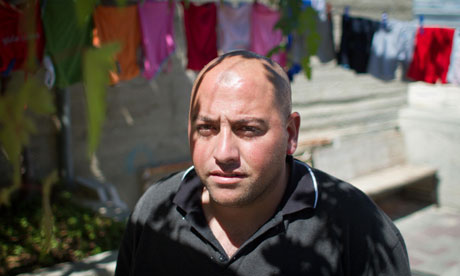
Freed Palestinian prisoner recounts torture and mistreatment in Israeli jails


Mukhlis Burghal, a Palestinian prisoner who was freed in exchange for Israeli soldier Gilad Shalit, recalls, "[The] torture keeps changing: beatings, isolation, tear gas, suspension of family visits." And after spending over 24 years in Israeli prisons, Burghal looks towards the future.

Muhlif3-cropped
After more than two decades in Israeli prisons, Burghal is getting used to things like cellular technology. "I want to be with my family, stay in my city, get to know it and get to know the people once again," Burghal says. (Photo: German Krimer)


Mukhlis Burghal grins like a child each time his mobile rings. He has become addicted to cellular technology since he discovered it just ten days ago.

“I´m in love with it; I have it on me everywhere I go”, Burghal, 49, confesses with a boyish smile that clashes with his white hair. His face is kind; his manners remarkably relaxed for a man who spent over 24 years in Israeli prisons. He discusses both his time in jail and his new-found freedom under the shade of lemon and tangerine trees behind his family home in Lod, not far from Tel Aviv.

On October 18, Burghal was released along with 476 Palestinians in exchange for Gilad Shalit, the Israeli soldier who as captured by Hamas more than five years ago. Burghal seems neither sad nor angry. He is far too interested in “absorbing,” as he puts it, everything: the new unfamiliar objects, like cell phones; the old things he has forgotten; and the memories that helped him survive beatings and mistreatment--people and places that are becoming alive once again.

“This is like being born again. It´s what I feel; I´m being reborn”, he says, as he glances at his five-year-old niece playing nearby.

During Burghal’s first free night, his house was full of people. Relatives, friends and neighbours had gathered to celebrate the day they had been waiting for since September 11th, 1987, when Israeli policemen arrested Burghal for throwing a grenade at a bus full of Israeli soldiers. Although the grenade did not go off and nobody died, a military court sentenced him to life imprisonment. 17 years later, his sentence was reduced to 40 years in prison.

But no one was thinking of those difficult times on the night Burghal was released.

“The most impressive and rejoicing part was seeing and feeling people. My family, all the citizens in my city, the Arab citizens, and many people from around here and from all over the country. I felt and saw happiness in the eyes of those people; this was what impressed me most and made me really happy,” he recalls, his eyes clouded by emotion.

Close to midnight, the house was still crowded, but Burghal and two of his brothers snuck away and went to their father´s grave. He died in 1991 and Burghal had never had the chance to say goodbye to him, to lay flowers on his tomb, or to or hug his mother. Burghal had not been allowed any calls, letters, or visits other than the regular 30-minute visit every fortnight (oin recent years, visits have been extended to 45 minutes).

Mukhlis had another “small dream” to achieve. In less than half an hour, the three men were barefoot, enjoying the sand of Jaffa beach. Above them, the stars and the moon projected a show of light and shadow, a show Mukhlis could only dream of for the last 24 years.

As he looks back, the grey-haired man who plays with his mobile with a shy smile does not speak with regret; nor does he make a stern statement in favor of the armed struggle or the “Palestinian revolution.”

“What will become of my life?” he wonders aloud. “The first thing I want is to spend a long time with my mother, I want to make her happy. I want to be with my family, stay in my city, get to know it and get to know the people once again. I want to reach a point where I can  feel normal in this new life. I want to visit my brothers who live abroad, too. And then, maybe in a year or two, I´ll plan something out. For the time being, I can´t make any plans. All in all, I don´t see myself too distant from the activities for the community”.

The only time Burghal’s youthful smile fades is when he remembers his friends who are still behind bars.

“The hardest thing is to know there´s not much I can do for them. After so many years of sharing hardships they become your family. Their families are my family and mine is theirs”, he says, as he looks at his brother, who visited him every month during the quarter of a century he spent in prison.

Over the last few days, his family has learned about Burghal’s suffering--the mistreatment and deprivation he had to endure inside the prison.

“The initial questioning is one of the most difficult moments, the hardest”, Burghal says, touching his head. “My head ended up with 14 stitches.”

Halfway through his jail time, he received another severe beating that resulted in 16 stitches in his head, a punctured lung, a broken rib, and a dislocated jaw.

“[The] torture keeps changing: beatings, isolation, tear gas, suspension of family visits," he recalls, with an emotional detachment that makes his story even harder to hear.

Transfers from one jail to another were another method of torture. Prisoners sometimes travel for up to ten hours, inside a metal box, with metal seats, with hands and feet cuffed together. They stop for two or three hours at each prison where, if they are lucky, guards may allow them to go to a bathroom.

“The food is thrown inside the truck in plastic bags,” he says. “I myself always avoided eating during those trips because all cuffed up and very uncomfortable, I ended up vomiting.”

But one of the most difficult mistreatment that Palestinian prisoners endure is shoddy--or no-- medical attention, given on the whim of the Israeli authorities. Burghal remembered three of his mates who died from asthma attacks and another one who caught AIDS after the prison dentist used an old needle.

“That shows how much they care for us,” Burghal says.

Burghal had to face three medical issues during his long stay in prison; one in the knee, another one in his back, and the third in his teeth. For the first two, after having all the pre-surgery check-ups, doctors decided that the operations were “not necessary.” Now, Burghal is planning to undergo surgery abroad.

His teeth, on the other hand, turned into a legal battle which left a bitter taste in his mouth: “I managed to get a doctor from outside but once the treatment started, they called it off. So now it´s not finished. I was told I had to make a new request for the treatment since they wanted to study my case once again.”

Burghal has a thousand stories to tell from his life in prison; in these 24 years the world has changed and so has he. He went in as a 25-year-old and, now, he is 49. He went in a young man with his whole life ahead of him and came out a veteran whose prison mates called “Uncle.”
But he would rather not give too much thought to the years that passed and all he missed. He wants to travel, enjoy his family, and feel normal again. At midlife, Mukhlis wants to be reborn.

Friday, October 21, 2011

Israeli police detain 14 at prison protest

Demonstrators at Israel's Ofer prison express support of detainees' hunger
strike on Oct. 5, 2011 (MaanImages)

GAZA CITY (Ma'an) -- Israeli police detained 14 Palestinian citizens of Israel on Thursday during a demonstration at Israel's Hasharon prison calling for the release of all Palestinian detainees, a human rights organization said.

Around 40 Palestinian-Israelis gathered to wave Palestinian flags and demand the release of prisoners that were not part of an exchange deal between Israel and Hamas, the head of Israel-based human rights group Huriyat Muhammad Kananeh told Ma'an.

Israel released 477 prisoners, including 27 women, in return for Hamas handing over captured Israeli soldier Gilad Shalit on Tuesday, and 550 additional prisoners will be released in two months under the swap deal.

Israeli police spokesman Mickey Rosenfeld said he could only confirm 12 were detained at the scene.

He told Ma'an the protest was illegal as it lacked coordination with authorities, and that protesters called for the kidnap of more soldiers and attacked a police officer.

Kananeh said police dispersed the protest by force, adding that three women were among those detained.

Demonstrators were calling for the release of the nine women still in Israeli jails, he said.

Hamas spokesman Fawzi Barhoum said on Thursday that Egypt has assured the movement that the remaining female prisoners will be released "in the coming days," as part of the swap deal.

Thursday, October 20, 2011

Egypt arrests Israeli national at border crossing

EL-ARISH, Egypt (Ma'an) -- Egyptian authorities arrested a Palestinian citizen of Israel at the Egypt border Thursday, saying they discovered a weapon and large quantity of ammunition in his possession.

The Palestinian-Israeli, who was not otherwise identified, told Egyptian security forces he worked for an Israeli tourism company and was traveling with his wife to the northern Sinai city of Taba, officials said.

Forces discovered an American-made weapon when searching the man's car as he entered Egypt via the Taba border crossing near the southern town of Eilat, Egyptian security officials told Ma'an.

The suspect was detained when he failed to provide an adequate explanation for the weapon and ammunition, and has been transferred for investigation to facilities in southern Sinai, they said.

The arrest comes amid a breakdown in Israel-Egypt relations, although they have improved in recent days following Cairo's successful mediation of a prisoner exchange deal with Hamas.

Egypt is also considering swapping a US-Israeli joint national, suspected of spying for Israel, for 81 Egyptians detained in Israel, the state-owned daily Al-Ahram said Sunday.

Israel enjoyed close ties with deposed President Hosni Mubarak, brought down in February in a popular uprising. Relations have remained tense as Egypt struggles to maintain security in the Sinai.

Tuesday, October 18, 2011

Swap Deal Officially Kicked-Off

Tuesday October 18, 2011 09:49 by Saed Bannoura - IMEMC & Agencies

The prisoner-swap deal signed between Hamas and Israel has effectively entered the implementation process after the Israeli High Court of Justice rejected all appeals filed by Israelis against it. Shalit is now in Egypt; Egyptian sources reported. Hundreds of detainees loaded onto buses in preparation for their release.
Gilad Shalit
Gilad Shalit

The deal will set 1027 Palestinian detainees free on two phases in exchange for the release of corporal Gilad Shalit. Media sources reported that Shalit was moved to Egypt in preparation to be handed to Israel after it releases the first 477 detainees.

Egyptian media sources reported that Shalit was moved to Egypt and is now in the hands of the Egyptian security services awaiting to be moved back to Israel.

Shalit reportedly crossed into Egypt when an SUV loaded with Palestinian fighters crossing the border towards Egypt, and quickly drove back to the Palestinian side of the border after handing Shalit to Egypt.

The second phase will ensure the release of 550 detainees two months after the first phase is concluded.

The implementation of the first phase of the deal started at 2 on Tuesday at dawn when 96 detainees were moved from the Negev Detention Camp to the Ofer Prison in preparation to be released into the West Bank.

334 detainees were loaded onto buses that will drive them to the Kerem Shalom (Karem Abu Salem) Crossing between Israel and Gaza.

On Tuesday around 4 at dawn, a bus loaded with 27 female detainees, 16 detainees from Jerusalem, and three from the 1948 territories drove off on its way to release them. Four female detainees were sent to Karem Abu Salem Crossing, while one detainee from the Golan Heights was moved to a local police station. Three detainees from the 1948 territories were moved to Majiddo Prison in preparation for their release.

On Monday evening, the Israeli High Court rejected four appeals filed by Israelis against the deal, stated that the swap-deal is totally legal, and granted the deal a green-light.

Palestinian Minister of Detainees in the West Bank, Issa Qaraqe', stated that Palestinian President, Mahmoud Abbas, will personally welcome the West Bank released detainees at his headquarters in Ramallah. Leaders of different factions and institutions will be attending the ceremony.

The Hamas movement in Gaza also concluded its preparations for welcome the detainees who will be sent to Gaza. 163 detainees will be sent to the Rafah Border Terminal before heading to Gaza.

40 detainees will be forced into exile, while Hamas' Political Bureau head, Khaled Mashal, will be holding an official ceremony in Cairo to welcome them.

Israeli military and security sources reported that the army is preparing to counter any scenario that could jeopardize the deal, especially after Shalit is handed to Egyptian mediators.

Before being sent back home, Israel wants to conduct a comprehensive medical checkup on Shalit before he is airlifted to a military base in Israel, where his parents will be waiting for him. He will likely undergo another checkup at the second base before he is sent back home with his family.

Israel imposed media restrictions at the base in order to ensure privacy for Shalit and his family.

Shalit will be meeting Israeli Prime Minister, Benjamin Netanyahu, Defense Minister, Ehud Barak, and Israeli Army Chief of Staff, Benny Gantz.

Wednesday, October 12, 2011

Families relieved by prisoner swap

Family members of Palestinian
prisoners still do not know who will
be released (IRIN/Erica Silverman)
Ma'an

GAZA CITY (IRIN) -- Palestinian families are eagerly awaiting the publication of the names of the more than 1,000 detainees that are to be released in a ground-breaking prisoner swap deal with Israel.

The Israeli cabinet approved the agreement today, under which captive Israeli soldier Gilad Shalit will be freed in exchange for 1,029 Palestinian prisoners held in Israeli jails.

Shalit has been in Hamas captivity since June 2006, captured in a cross-border raid executed by Hamas-linked militants. In response, Israel targeted Gaza’s main power station that supplies electricity to Gaza residents.

Outside the International Committee of the Red Cross office in Gaza City, Um Mahmoud holds a large photograph of her son Mahmoud Rais, now aged 30. He was arrested in 2003.

“He was detained at an Israeli checkpoint inside Gaza and we never learned why he was sentenced,” she says. “This release is a victory for Palestinians and for the government.”

Um Mohamed also clutches a photograph of her husband Salama Musleh, arrested and detained by Israeli authorities in 2003 for killing an Israeli settler. She claims the settler killed seven Palestinians.

“God wiling I will find my husband’s name on the list, I have been waiting 18 years,” she says, adding: “The Palestinian Authority failed to release Palestinian prisoners without a peace process.”

It is not yet clear whether any children will be included in the release. At the end of June 2011, 209 Palestinian boys aged 12-17 were in Israeli detention, according to UNICEF.

During the reporting period (May and June 2011), 15 cases were documented of ill-treatment - in some cases amounting to torture of Palestinian boys aged 13-17 by the Israeli authorities during arrest, interrogation and detention.

Affidavits were taken for all cases that involved the use of hand-ties (14 instances), blindfolding (11), beatings (10), stripped of clothes (10), exposure to heat/cold/rain (5), kicking (5), and verbal abuse (5).

Hunger strike

Ex-prisoners and families of detainees have been staging a hunger strike outside ICRC headquarters in Gaza City for over a week, in solidarity with the estimated 1,000 Palestinian prisoners inside Israeli jails who began a massive hunger strike on 27 September protesting inhumane conditions inside the jails.

Strikers’ demands include ending the use of isolation cells and the denial of basic health treatment.

“The ICRC has facilitated medical visits to the strikers from the start,” said ICRC spokesperson Phiri. “We have shifted resources to focus on these prisoners,” he said.

According to the agreement, brokered by Egyptian intelligence, Shalit is expected to be released in about a week, along with the release of 479 Palestinian security prisoners.

Of these 479 prisoners, 96 are from the West Bank and 131 from the Gaza Strip; they will be allowed to return to their homes. Fourteen prisoners from East Jerusalem and six Israeli Arabs will also be allowed to return to their homes.

About half of the released prisoners (203) will not be allowed to return to their homes. Forty will be deported and the rest transferred to Gaza.

Twenty-seven women, all the women imprisoned in Israel for security offenses, will be released. Two will be deported, one to Gaza and one to Jordan.

In two months, Israel will release another 550 prisoners of its choosing.

Over 5,200 Palestinians were being held in Israeli custody for occupation-related offenses in August, including 29 women, according to the UN Office for the Coordination of Humanitarian Affairs.

Of that number 272 are administrative detainees, Palestinians held by the Israeli authorities without charge or trial, allegedly for preventive purposes.

“Sigh of relief”

Israeli Prime Minister Benjamin Netanyahu said the deal succeeded in bringing Shalit home, while maintaining the security of Israeli citizens.

Some in Israel, however, questioned the move, concerned that releasing so many Palestinian prisoners for one Israeli soldier could encourage future abductions.

“For the last five years, the Shalit case has shaped the feelings of many Israelis towards Gaza, as well as the policies of successive Israeli governments towards Gaza,” said Sari Bashi, director of Israeli NGO Gisha, the legal center for freedom of movement.

“The sigh of relief is palpable throughout Israel and of course the relief felt by the Shalit family and the families of the prisoners who will be released,” she said.

Israeli men and women must serve in the military. In a country where most families watch their young son or daughter leave for the army, the Shalit case has been an emotional issue.

Wednesday, September 21, 2011

Israel Presents Lists Of Detainees It Won’t Release

Friday September 09, 2011 11:53 by Saed Bannoura - IMEMC & Agencies

The Al Hayat Paper in London reported Friday that a third round of indirect prisoner-swap talks was held in Cairo last Tuesday under direct Egyptian supervision mediating between the Hamas movement and Israel, in an attempt to reach a prisoner swap deal. Yet, Israel presented a list of detainees it will not release under any condition.
Palestinian Detainees - Image Palestinian Prisoners Society

Al Hayat reported that Cairo prepared a draft that includes all points of agreement, and new ideas that are said to help advance prisoner swap talks that would ensure the release of Israeli soldier Gilad Shalit in exchange for the release of hundreds of Palestinian detainees imprisoned by Israel.

Israel agreed to release all female prisoners, and Arab-Palestinian prisoners from Jerusalem and the 1948 territories (Israel).

During previous rounds of talks, Israel presented a list that contains the names of 120 detainees that it will not release under all circumstances. But according to the new report, the list dropped to 40 detainees.

The Al Hayat further reported that Israel also agreed to reduce the number of detainees it insists on deporting out of Palestine.

It is worth mentioning that the Hamas negotiations team is headed by Ahmad Al Ja’bary, a senior leader of the Al Qassam Brigades, the armed wing of Hamas, and David Midan, representing the Israeli Prime Minister.

Corporal Gilad Shalit was captured when three Palestinian resistance groups in Gaza carried out a cross border raid on a military base in June 2006; two Israeli soldiers and two fighters were killed.

Shalit is the only Israeli prisoner in Palestinian hands; Israel is holding captive more than 7500 Palestinians, including dozens of women and children.
 

Tuesday, August 23, 2011

UFree 'confident' of Salah acquittal

UFree, a EU-based charity representing political prisoners, claims it is ‘confident’ that Sheikh Raed Salah will not be deported from the UK.
ImageThe comments come as British courts prepare to deport Salah on charges that he entered the UK despite being served a travel ban. Since his arrest on June 28th, he has remained in British custody.
 
However, a statement by UFree, released today, has claimed that Salah ‘has an extremely strong case and a high probability of winning his case… in the next few weeks’. The charity’s chairman, Mohammed Hamdan, is reported to have visited Salah in prison and described his condition as ‘[in] good health and high spirits’.
 
Appeasement?
 
The arrest of Salah has proved controversial in both the UK and abroad. Theresa May, the Home Secretary, was accused of ‘incompetence’ for the failure of the UK Border Agency to prevent Salah’s entry, whilst several British newspapers have lauded his imprisonment, citing accusations of anti-semitism made against him. 
 
Critics have condemned the move, however, describing it as ‘appease[ment] of the pro-Israeli lobby in Britain’, according to UFree itself. Al-Jazeera, the pan-Arab satellite news channel, has claimed that the arrest ‘undermines… Britain’s democratic image’.

Monday, July 18, 2011

Sheikh Raed Salah released by British court

BETHLEHEM (Ma’an) -- The British High Court decided Friday to release head of the Islamic Movement in Israel, Sheikh Raed Salah, who had been detained in Britain for more than two weeks.

At the High Court on Friday, judge Nicholas Stadlen granted Salah bail on condition that he wear an electronic tag, observe a night-time curfew, report daily to immigration officials and stay at the home of a friend in London.

He said he would not be released until late Monday, to give government officials time to carry out checks on the bail address.

Sheikh Raed Salah, 52, was detained on June 28 during a visit to Britain following an invitation by the Middle East Studies Center and the Palestinian Forum.

He was detained on the orders of Home Secretary Theresa May.

The judge also banned Salah from "public speaking" and any activity which might promote terrorism or criminal activity.

A government statement was issued to deport Salah from British territory after it said he was forbidden to enter the country. Immigration authorities said they were unaware how he managed to enter Britain.

The Islamic movement considered the deportation order an Israeli decision with British complicity.

The Islamic Movement is tolerated in Israel but is under constant surveillance because of its perceived links with the Palestinian militant Hamas movement that controls Gaza, as well as with other Islamist groups worldwide.

AFP contributed to this report

Friday, April 22, 2011

Israel: Lawyers passed letters to Islamic Jihad

 Maan

JERUSALEM (AFP) -- Four Palestinian-Israeli lawyers have been arrested over allegations they passed letters from Palestinians in Israeli jails to the Islamic Jihad movement in Gaza, a police spokesman said Wednesday.

"An Arab-Israeli lawyer, a resident of Acre, is suspected of having collected letters from Palestinian prisoners held in Israel, who she was authorized to visit, and then giving them to three of her colleagues, who are also Arab-Israelis," spokesman Micky Rosenfeld said.

"They then passed these letters to Islamic Jihad in Gaza using an as intermediary the Mahajat Al-Quds organization, which was designated illegal in 2006," he added.

Israel considers the Islamic Jihad movement a terrorist organization.

"Documents supporting the allegations were found during searches at the homes of the four lawyers, and all are accused of links with a terrorist organization and corruption, for having received large sums of money" in exchange for passing along the letters, Rosenfeld said.

He did not identify the lawyers, but Israel's Haaretz newspaper named the female lawyer from Acre as 42-year-old Suhir Ayub.

Israel's Palestinian community numbers 1.3 million, about 20 percent of the population. It is made up of the 160,000 Palestinians who remained in Israel after its 1948 establishment, and their descendants.

---------


IOA claims arrest of 4 lawyers passing information to Islamic Jihad prisoners
[ 20/04/2011 - 02:03 PM ]


NAZARETH, (PIC)-- The Israeli occupation authority (IOA) said it arrested four Palestinian lawyers from the 1948 occupied lands on allegation of transferring information between prisoners in Israeli jails and leaders from the Islamic Jihad Movement in the Gaza Strip.
Yedioth Ahronoth newspaper on Wednesday said an indictment was filed with the central court in occupied Jerusalem against lawyer Suhair Ayoub for passing information on to Islamic Jihad prisoners from their leaders in Gaza and vice versa.
The newspaper added that lawyer Ayoub has been detained until all legal proceedings against her end and the other three lawyers were released with restrictions.
It claimed that Ayoub was passing messages about appointments within the ranks of Islamic Jihad prisoners, their incarceration conditions, and their activities in prison.

Thursday, April 21, 2011

Salah said IOF soldiers used 'stupid and racist behavior' during Allenby arrest

[ 19/04/2011 - 11:01 AM ]


OCCUPIED JERUSALEM, (PIC)-- Leader of the Islamic Movement in 1948-occupied Palestine Raed Salah said that Israeli occupation forces soldiers used ”stupid and racist behavior” when they arrested him and his wife at the Allenby Bridge border crossing after they refused to comply with a provocative strip search targeting his wife.
The family was returning to the 1948-occupied Palestinian territories after making pilgrimage to Makkah when they were stopped and searched at the bridge linking Jordan and the West Bank.
Salah and his wife as well as two other couples were arrested for allegedly obstructing the work of security personnel and were later released on bail. The other two men and women were let go after a few hours.
”This is the first time they tried to search my wife. It was the intent of the police and security men, as every one of them has stated, to ask her to remove her clothing; and naturally, that was absolutely rejected,” Salah said after his release. ”We told them my wife and I will absolutely not allow you to do that, and we will defend our right to defend our honor until the end.”
”Incidents evolved, and I was arrested on charges where I was the victim,” he said. ”My wife was also a victim like me. Then I was taken to the Maskoubia interrogation center after I was detained at the King Hussein Bridge police station.”
Salah has filed a complaint that includes three items. The first is directed at the intelligence men who threatened the group. The second is directed at the intelligence officer that used profanity against them. And the third is against the detectives who tried to violate his wife's honor. He said he would follow up on the case until it is finished, even if he had to ”knock on the doors of the international courts”.

Monday, April 18, 2011

Sheikh Salah detained at Allenby

[ 18/04/2011 - 09:05 AM ]


UMM AL-FAHM, (PIC)-- Israel occupation force (IOF) soldiers rearrested Islamic Movement chief Raed Salah Sunday evening at the Jericho crossing on charges of obstructing the work of Israeli security personnel.
According to sources in the Islamic Movement in 1948-occupied Palestine, the IOF soldiers arrested Salah along with Suleiman Ighbarya, who heads the Isra development and relief organization, Jamal Rashid, who chairs a Jerusalem reconstruction organization, and the wives of all three men while the group was on a return trip from Makkah after performing 'umrah', the minor pilgrimage in Islam. The group was released after a few hours, but Salah and his wife were kept in custody.
Ighbarya said Salah and his wife were provoked by the soldiers when they entered the crossing as his wife was subjected to a ”humiliating strip search”.
Salah intervened to defend his wife who refused to be strip searched, and he condemned the treatment used against his wife. The occupation forces then proceeded to arrest both Salah and wife alleging that they obstructed the work of security personnel, Ighbarya added.
Ighbarya suspected that the arrest was pre-arranged, as the Israeli occupation officers videotaped the entire incident from the moment Salah entered the crossing, an unprecedented measure taken against those returning from umrah.

Sheikh Salah detained at Allenby
 
Published yesterday (updated) 17/04/2011 22:13
 
TEL AVIV (Ma'an) -- Head of the Islamic Movement in Israsel Sheikh Raed Salah was detained by Israeli officials at the Allenby Bridge border crossing as prepared to cross into Jordan.

According to a report from the Jerusalem Post, Salah was detained because he refused to submit to investigations and searches that border staff at the crossing intended to carry out.

Police told the Post that Salah arrived at the border crossing with his wife and refused a search of his wife, standing between police and his spouse to prevent it.

Police spokesman Micky Rosenfeld told AFP that Salah was arrested at the crossing after an altercation in which he allegedly struck an interrogator who wanted to question his wife.

"He arrived at the Allenby crossing point with his wife, they went through standard security procedures during which his wife was also questioned," Rosenfeld told AFP.

"At some point he disagreed with his wife being asked further questions during the standard security procedures, and then apparently he struck one of the police officers," he added.

"He was immediately questioned at the scene there, and from what I understand he was then taken to Jerusalem for further questioning."

Salah, who was planning to cross into Jordan, was the only person involved in the incident, Rosenfeld said. His wife was not arrested.

Salah was sentenced to five months in Israeli prison and released in December 2010, on charges of obstructing an Israeli soldier.

He was detained in Jerusalem in February, during a visit to a protest tent in the eastern part of the city, where he was showing support for Palestinians evicted from their homes by aggressive settler groups.

He was also held after taking part in a Gaza-bound aid flotilla that Israeli naval commandos stormed on May 31 in an operation which left nine Turkish activists dead.

The Islamic Movement is tolerated in Israel but is under constant surveillance because of its perceived links with the militant Hamas movement that controls the Gaza Strip, as well as with other Islamist groups worldwide.

Israel's Arab community numbers 1.3 million, about 20 percent of the population. It is made up of 160,000 Palestinians who remained in Israel after the 1948 establishment of the Jewish state, and their descendants.

AFP contributed to this report

Tuesday, March 22, 2011

Facebook Activist Charged With Incitement And “Humiliating Public Employee”

Thursday March 17, 2011 08:29 by Saed Bannoura - IMEMC News

A Palestinian Facebook activist from Sakhnin, north of the country, was kidnapped by the Israeli police on Wednesday and was placed under interrogation on charges of “inciting violence, and humiliating a public employee”.
Mohammad Ghanayim - Image Arabs48
The activist, Mohammad Ghanayim, was detained on Wednesday at dawn when a “Crime Prevention” unit of the Israeli police broke into his home in Sahknin and kidnapped him, according to the Arabs48 news website.

Ghanayim was accused of “inciting violence” through his Facebook page, and for publishing “incitement materials” on the Arabs48 website, according to the police.

The police claimed that Ghanayim was advocating through his Facebook page for the death of an Arab officer who serves in the Israeli military north of the country.

The Israeli prosecution said that he used his Facebook page to voice a threat to murder an officer, in addition to humiliating a public employee.

The director of the Arabs48 Website, Iz Ed-Deen Badran, said that he had no idea about the alleged threat, but said he believed the issue apparently related to a comment Ghanayim made on the Arabs48 website through his Facebook account.

Badran criticized the arrest of Ghanayim and denounced the Israeli police for ignoring incitement and death threats made by fundamentalist Jews against the Palestinian Arabs in the country.

Speaking to the Arabs48 website, Lawyer Mohammad Tarbiyya said that he was not allowed to meet his client, because the police told him that he could not meet his client until they completed an interrogation of Tarbiyya’s family in Sakhnin.

An Israeli court rejected the police’s refusal to allow Ghanayim access to his lawyer, and allowed the lawyer to meet Ghanayim before he was sent to court.

Lawyer Fuad Sultani said that the police dropped the incitement to murder charge, and are instead pressing charges of incitement to violence, terror, and humiliating a public employee.

Sultani further stated that the police immediately issued a statement to the media claiming that “incitement” had been published on the Arabs48 website. He said that the police are desperately trying to make links between acts that could potentially happen, and comments published as a personal opinion criticized military services.

Both Sultani and Tarbiyya said that the court refused to extend the remand of Tarbiyya for an additional week as requested by the prosecution, and only extended his remand until Sunday under the pretext that “there are more suspects that are currently under interrogation” while three more will be interrogated soon.

Wednesday, February 23, 2011

Sheikh Raed Salah detained in Jerusalem

JERUSALEM (Ma’an) -- Israeli police on Tuesday detained Islamic Movement leader Sheikh Raed Salah in Jerusalem while he was visiting an East Jerusalem neighborhood, saying he was suspected of committing arson.

Israel's police spokesman Micky Rosenfeld said Salah was suspected of setting fire to a forest area in southern Israel two weeks ago.

Salah's advisor Sheikh Ali Abu Sheikha said the sheikh was detained after visiting a sit-in protest tent in Silwan, the site of frequent home demolitions.

Though he has been periodically barred from Jerusalem, Salah regularly visits families with home demolition and eviction orders in a show of support.

Salah was released from an Israeli jail in December, after serving five months for allegedly spitting at an Israeli policeman in February 2007, a charge he has always denied.

On his release from prison, he said he was the victim of political persecution.

He has been detained on a number of occasions.

Abu Teir: Salah arrest aimed at silencing Jerusalemites
[ 23/02/2011 - 07:13 PM ]


RAMALLAH, (PIC)-- Jerusalem's banished MP Mohammed Abu Teir condemned the arrest of Sheikh Raed Salah, calling it a new stab at ”silencing the voice of truth that defends Jerusalem”.
Salah, the leader  of the Islamic Movement in 1948-occupied Palestine, was arrested in the city's Sheikh Jarrah district Tuesday heading back from a festival in Silwan's Al-Bustan neighborhood.
Abu Teir told the Palestinian Information Center that Israel is seeking to “absent” Sheikh Salah for his role in exposing Israel's crimes against Jerusalem and the Aqsa Mosque.
The exiled MP stressed that the continued persecution of Salah and all other figures defending Palestinian rights would not deter defense efforts in Jerusalem, the Aqsa Mosque, and the Islamic and national constants, but would only motivate more efforts ”until all rights are returned to their people.”
Abu Teir called on the Arabs and Muslims to help Palestinians living in Jerusalem and 1948-occupied Palestine defend the city's holy sites from Israeli Judaization plots, and called upon Jerusalemites to ”firmly and strongly” be ready to stand up against and expose new transgression.

Sunday, December 12, 2010

Sheikh Salah: The days I spent in Israeli jails were the best in my life

[ 12/12/2010 - 06:30 PM ]


GAZA, (PIC)-- Sheikh Ra'ed Salah, the head of the Islamic Movement in the 1948 occupied lands, stated immediately after his release from Ramle prison that the five months he spent in jails was the best days in his life and heavenly moments he spent in worshiping God.
Sheikh Salah said he was able to write three books while in detention and called on the world to consider the freedom detainees inside Israeli jails political prisoners who must be released immediately according to international law.
As for the other charges to be leveled against him, he expressed his unconcern about any trials held against him, affirming that his determination to defend the holy city and the Aqsa Mosque will never be undermined by any Israeli action taken against him.
The Sheikh also noted that he will not recognize the Israeli military decision banning him from entering the Aqsa Mosque.

Salah freed from Israeli jail

Ma'an
 AMLA, Israel (AFP) - Islamist leader Sheikh Raed Salah was freed from jail Sunday after serving five months behind bars for spitting at an Israeli policeman, a prison spokesman said.

The Palestinian-Israeli leader, who heads the northern wing of the Islamic Movement, was greeted as he left prison in Ramla near Tel Aviv by a crowd of supporters waving the movement's green bunting as well as Palestinian and Turkish flags, an AFP photographer said.

Speaking briefly to his supporters, he stressed he was the victim of "political persecution" for his defense of the flashpoint Al-Aqsa Mosque compound in occupied East Jerusalem.

He began serving his term on July 25 after being convicted of assault for an incident in Feb. 2007 in Jerusalem, in which court documents said he insulted a border policeman and spat in his face.

The assault, which Salah has always denied, took place during a protest outside the Dung Gate in the southern wall of the Old City where the Israeli authorities were carrying out restoration work near the mosque.

The compound is the third holiest site for Muslims and the holiest site for Jews, who refer to it as the Temple Mount. It has been the scene of several outbreaks of violence over the course of the decades-old Israeli-Palestinian conflict.

A Jerusalem court reduced his initial sentence of nine months to five.

Salah has been detained on a number of occasions, most recently after taking part in a Gaza-bound aid flotilla stormed on May 31 by Israeli naval commandos in an operation which left nine Turkish activists dead.

The Islamic Movement is tolerated in Israel but is under constant surveillance for its perceived links with the Islamist Hamas movement, which controls the Gaza Strip, as well as with other groups around the world.

Israel's Palestinian community numbers 1.3 million, about 20 percent of the population. It is made up of 160,000 Palestinians who remained in Israel after the 1948 establishment of the Israeli state, and their descendants.


Aqsa preacher Salah will continue to defend Aqsa Mosque after his release

[ 12/12/2010 - 09:54 AM ]


UMM AL-FAHM, (PIC)-- Arab leaders are fully geared to warmly welcome Aqsa Mosque preacher Ra'ed Salah upon his scheduled release Sunday morning following a five-month bid in Israeli custody, the Islamic Movement vice-president Kamal Al-Khatib told the Palestinian Information Center.
“Delegations from the Islamic Movement and Arab leaders in the '48-occupied territories will gather near the Ramle prison, where Sheikh Salah is detained, and from there they will proceed toward the city of Umm al-Fahm, where there will be a reception party suitable for the freed Sheikh.”
Khatib said the message Israel wanted to deliver by holding Salah was a failure. “No detention or intimidation can stop our movement and efforts to defend the Aqsa Mosque.”
Salah will not step out of prison for “recovery”, the Islamic Movement VP said, but he will go straight to the work field to defend Jerusalem and the Aqsa Mosque with the backing of the entire Islamic Movement and Palestinian people in the '48-occupied territories.
We will serve our people and our cause and what we cherish and believe in, even at the expense of our time and personal comfort, he added.
Speaking on warnings by Israeli officials of possible collapsing in the Aqsa Mosque and Jerusalem, Khatib said it is an “indicator of the volume of the present risks.”
“The warning does not absolve Israel of its liability, but only reflects that it is informed. They are part of excavations posed against the Aqsa Mosque, along with knowing of threats or intent to harm the Aqsa Mosque by extremist groups, and therefore they are subject to liability.”

Friday, October 29, 2010

IPS offers treatment for woman prisoner in return for her isolation

[ 27/10/2010 - 06:17 PM ]


NABLUS, (PIC)-- The Israeli prison service (IPA) has offered medical treatment for a Palestinian woman prisoner in Damon jail in return for isolating her for three months in Ramle prison.
Ahmed Al-Beitawi, a researcher in the international Tadamun (Solidarity) institution said that the prisoner Wurud Qassem from the 1948 occupied Teira town was suffering from acute pain in her teeth and jaw to the extent that she could not speak or eat properly.
She asked the IPS for treatment but she was surprised with the prison's clinic response that she should serve three months in solitary confinement in Ramle in return.
Beitawi said that the prisoner refused the offer, adding that she preferred pain alongside her prison mates rather than treatment and isolation.
The researcher said that the IPS was exploiting the pain of prisoners to blackmail them, recalling that medical treatment was previously offered to Palestinian prisoners in return for confession or deportation.
Medical neglect and solitary confinement were and remain the prisoners' main points of focus in their past and present strikes and demands, Beitawi pointed out.
Wurud Qassem was detained since October 2006 and is serving a six-year sentence on the charge of resisting occupation. Two other Palestinian women from the 1948 occupied Palestine are serving other sentences namely Lina Jarboni, 18 years, and Khadija Abu Ayyash, 3 years.

Wednesday, October 27, 2010

Palestinian Political Prisoner Ameer Makhoul to the World Education Forum Palestine

AIC

Tuesday, 26 October 2010 15:10 Ameer Makhoul
Brothers and sisters in the International Council of the World Social Forum

Brothers and sisters in the Palestinian National Committee of the World Education Forum
ameer3
My greetings and yearning to you all,

First, I send you my warmest greetings and appreciation for all your efforts in preparation for the World Education Forum in Palestine. It is an honor for Palestine to host this forum, accompanied by such notable international mobilization and solidarity. However, it is also an honor for the World Education forum to be hosted by Palestine.

Second, from behind the bars of an Israeli prison I welcome you to Palestine on both sides of the so-called Green Line of occupation. I also welcome you in the name of Ittijah -- the Union of Arab Community-Based Organizations in Palestine 48 -- and in the name of civil society and the Palestinian social movement here and in exile.

Together we marched forward and laid the foundations for the World Education Forum, and shoulder to shoulder we began our preparations internationally and in Palestine and the Arab World. It was during this process that I was arrested, in the beginning of May 2010 - an intimidation arrest that targeted us all. Five months have passed since then, but everything I face today – in the form of an unjust imprisonment, judicial procedures and trial – is no less oppressive than the physical and psychological torture I endured. However, what distinguishes us Palestinians is our free-will and steadfastness, which are used to resist oppression and the oppressors and their so-called justice. We are not deceived that there exists an Israeli justice; on the contrary, we view the court as an opportunity to consolidate the popular and international mobilization and struggle that already exists – these are the cornerstones of our defending of our rights and the tools that prevent their robbery by the occupation state.

Wherever we may be, we are brothers and sisters in values – the values of justice, freedom and human dignity. We share a common vision - that of the oppressed peoples, nations and individuals; of the victims of state terrorism, aggression and neo-liberalism and imperialism; of victims of all forms of exploitation, violence and discrimination; of all the wretched of this Earth – individuals and collectives - who yearn for dignity. We meet in Palestine, this nation and land that has become the meeting point of the free in spirit and of all those who believe that a different world is possible.

As I write you from Israeli prison, I permit myself to send greetings from this sector of the Palestinian people, that represents the entire Palestinian society - that of the prisoners of freedom in the prisons of occupation and apartheid. These 8,000 prisoners are in their homeland. Yet, at the same time, they are barred from this land. However, no matter how hard the walls of the prison may be, they will not stand between them and their right to have a nation. It’s important that you know that these 8,000 prisoners are not a just statistic or a number, but each and every one of them has a name, a dream, a father, brother, sister, son or daughter. Each has his or her own suffering, notwithstanding the collective one, and that of their families who endure the great and exhausting suffering of seeing their children on the other side of the wall. I don’t speak of that famous apartheid wall that we all know - this wall is less famous, for it is made of glass and prevents the Arab and Palestinian prisoners from touching their parents, allowing them to talk to their families only once every two weeks, for 45 minutes, through the phone receiver and the humiliation behind the glass barrier.

These prisoners are prohibited not only from freedom, but also from their families, Arabic newspapers, and all but a few books. They are prohibited from building a family, from obtaining an education, and from everything else but their dream of their coming freedom, which is the product of steadfastness and will: for in them lies the core of the hope and humanity of the oppressed that are targeted by the oppressor. The oppressor knows very well that he would lose the battle if the Palestinian will is not defeated.

There is an Israeli prisoner in Gaza, a soldier of the occupation and the forces of murder. The whole world knows his name and age, and feels the pain of his family. There is nothing wrong with that, of course. But where is the international community when it comes to the 8,000 Palestinian prisoners who are imprisoned for their struggle and human dignity, and the hundreds of thousands of Palestinian prisoners who were forced into Israeli prisons in the past? Do they not have a story too?

The globalization of the media, in addition to the hegemony of neo-liberal values, are what create the imaginary military and economic equality between colonization and its victims, an equation of “values.” Suffering becomes the share of the oppressor, while the oppressed becomes the accused, and, in the best-case scenario, a statistic without a name, story or suffering. After all, Palestinian suffering has been subjected the same fate as that of the land: confiscation.

However, social movements are capable of creating an alternative and another world. This is our dream, for we all share the dream of freedom, humanity and a world without oppression.

I urge you, my brothers and sisters, to come to Haifa on the day of my trial [Thursday, October 28th 2010] so that you can see for yourselves that the Israeli court and legal system are mere manifestations of the Israeli state’s injustice. Thus, we do not seek justice in these systems, but we choose to confront and resist them, and to accuse them to be instruments of oppression, not righteousness. A Palestinian prisoner in an Israeli prison can never be found innocent.

They target us, the 48 Palestinians, and our relations with our Palestinian brothers and sisters in the West Bank, in the Gaza Strip and in exile, as well as our relations with the Arab world. For according to the myths of Israeli security, these are considered to be “relations with the enemy.” However, our enemy is not and will never be any people or national, religions or ethnic group. As much as they would like to accuse us as such, the Jews are not our enemy. Our enemy is the enemy of humanity: the oppressor. Our enemy is the colonizing, racist Zionist project in Palestine in all of its forms; our enemy is imperialism, the hegemony of force and neo-liberal exploitation wherever it may be. Accordingly, I ask you to beware of the dangers of the aggression against Islam and accusing everything that is Muslim of terrorism; the aggression against everything that is Arab or Oriental, and against the peoples of the southern part of our Earth. The greatest terrorist operation that exists today is the globalized and internationalized state terrorism; it is the occupation and colonization of Palestine, Iraq and Afghanistan; it is neo-liberalism transcending continents. The greater the crisis of neo-liberalism becomes, the greater its exploitation, and the graver the consequences of its acts that aim to protect its profits, exploitations, thefts and hegemony over the riches of the Earth – riches that should belong to the peoples of the Earth.

The World Education Forum in Palestine is a special occasion and a wonderful demonstration of solidarity. The WEF forms part of the international campaign to lift the blockade on Gaza, Jerusalem and the Naqab, and to defend the rights both of Palestinians and of Palestine itself. The WEF constitutes a local and international mobilization in defense of justice; it is a source of hope, power, and steadfastness, confirming that Palestine is not yet forgotten and its people are not alone; this empowers and makes us stronger.

I salute you for choosing the road of freedom, justice and human dignity for the people of Palestine and all peoples of the world.

Another world is possible, and it is our duty to achieve it.

Ameer Makhoul

Member of the International Council of the World Social Forum

Member of the Palestinian National Committee of the World Education Forum

General Director of Ittijah- Union of Arab Community-Based Organizations in Palestine 48

Haifa activist accepts plea deal

By Jared Malsin

GAZA (Ma'an) -- Ameer Makhoul, the Palestinian activist from Haifa, accepted a plea bargain on Wednesday, confessing to espionage charges leveled by the Israeli state.

Makhoul, an Israeli citizen, was detained by authorities during a nighttime raid on his home in May. He and his lawyers maintain that the charges against him are political, and that he was tortured while in prison. Makhoul was also banned from seeing a lawyer for the first 12 days of his detention.

The charges include conspiring to assist an enemy, contact with a foreign agent and spying for Hezbollah.

Orna Kohn, one of Makhoul's lawyers from the legal rights group Adalah, said Makhoul decided to accept the plea deal after consultation with his defense team.

Under the deal, she said, the content of the indictment was reduced. The state is asking for 10 years imprisonment, while the defense is asking for seven, Kohn added.

Kohn said the decision to accept the deal was made after taking into consideration "the political climate now and the legal situation under Israeli law with so-called security charges, and given the history of rulings in Israeli courts dealing with such charges."

Kohn said she met Makhoul earlier on Wednesday. Asked about his condition, she said, "He's well. He's hopeful the court will rule for the minimal number of years."

"He understands his chances of being acquitted are slim," she added. She said the charges against him "in any other country should not have been basis for indictment."

A hearing is set for 5 December, when the court will decide whether to accept the plea deal reached between the prosecution and the defense.

Makhoul is the director of Ittijah, the Union of Arab Community-Based Organizations, and also chaired the High Arab Monitoring Committee's panel on defending Arab citizens' freedoms. He was arrested in May along with Omar Saeed, an activist with the Balad party.

The plea bargain was agreed upon in the Haifa District Court after being submitted on Tuesday.

A representative for the prosecution told the Israeli newspaper Haaretz: "The plea bargain was approved by the highest ranking levels of prosecution, including the state prosecutor. Most importantly Makhoul, who claimed he was being politically persecuted at the beginning of this, now stands in front of the court and admits to the charges attributed to him."

Wednesday, August 11, 2010

Israel releases Arab man convicted of 'rape by deception' from house arrest

Court orders delay in deciding jail term for Saber Kushour, who had consensual sex with woman who thought he was Jewish
Saber KushourSaber Kushour is appealing against his 18-month jail term. Photograph: Emil Salman/Haaretz
The Palestinian man convicted of raping an Israeli woman who believed he was Jewish has been released from house arrest pending his appeal.
Saber Kushour, who was sentenced to 18 months in jail last month for "rape by deception", was free to leave his home for the first time for almost two years after Israel's high court yesterday ordered a delay in implementing the prison term.
Since being released from prison two months after being charged with rape, Kushour has worn an electronic tag on his ankle which set off an alarm if he strayed beyond a tight boundary around his home in East Jerusalem.
In granting Kushour's release, the court said the circumstances of the case were unusual. "The possibility should not be ruled out that a higher court may reduce the petitioner's sentence."
Kushour yesterday took his two children shopping in a Jerusalem mall.
The case has attracted global attention. Kushour and the woman had consensual sex within 15 minutes of meeting in a West Jerusalem street around midday. Kushour told the woman his name was Dudu, a common Israeli nickname, although one that Kushour has answered to since being a small child.
The woman later realised he was an Arab and went to the police.
In convicting him, the judges said: "If the woman had not believed that the accused was a Jewish bachelor interested in a significant romantic relationship, she would not have co-operated."
Kushour admits to having claimed he was single.
The petition against his conviction states that Kushour's conduct could be considered immoral, but it is not criminal.
Kushour claims to have had messages of support from around the world. Critics of the conviction said the case was an example of racism against Arabs in Israel, and that if it had been a Jewish man passing himself off as Arab, a complaint would never have reached court.


Wednesday, July 28, 2010

Khatib warns of plotting to kill Sheikh Salah in prison

[ 28/07/2010 - 03:55 PM ]


RAMALLAH, (PIC)-- Sheikh Kamal Al-Khatib, the deputy leader of the Islamic movement in 1948 occupied Palestine, has warned of an Israeli plot to kill Sheikh Raed Salah, the leader of the movement, while serving a jail sentence.
Khatib in a press statement on Wednesday said that there is a danger on Sheikh Salah's life from Jewish homicide convicts in the Ayalon prison where he is incarcerated.
He recalled that Sheikh Salah was the target of a failed attempt on his life while boarding the Freedom Flotilla late last May at the hands of the Israeli forces and the scenario might recur while in jail, charging the Shabak with inciting against him.
Khatib described the five-month sentence against Sheikh Salah as "oppressive" because the Sheikh was defending himself against the Israeli police attacks at Bab Al-Maghareba.